Sarson ka Khet, Amitsari Kulcha, Lassi, Karha Prasad, Phulkari dupatta, Jutti – that pretty much sums up Amritsar, a busting city in the Indian state of Punjab.
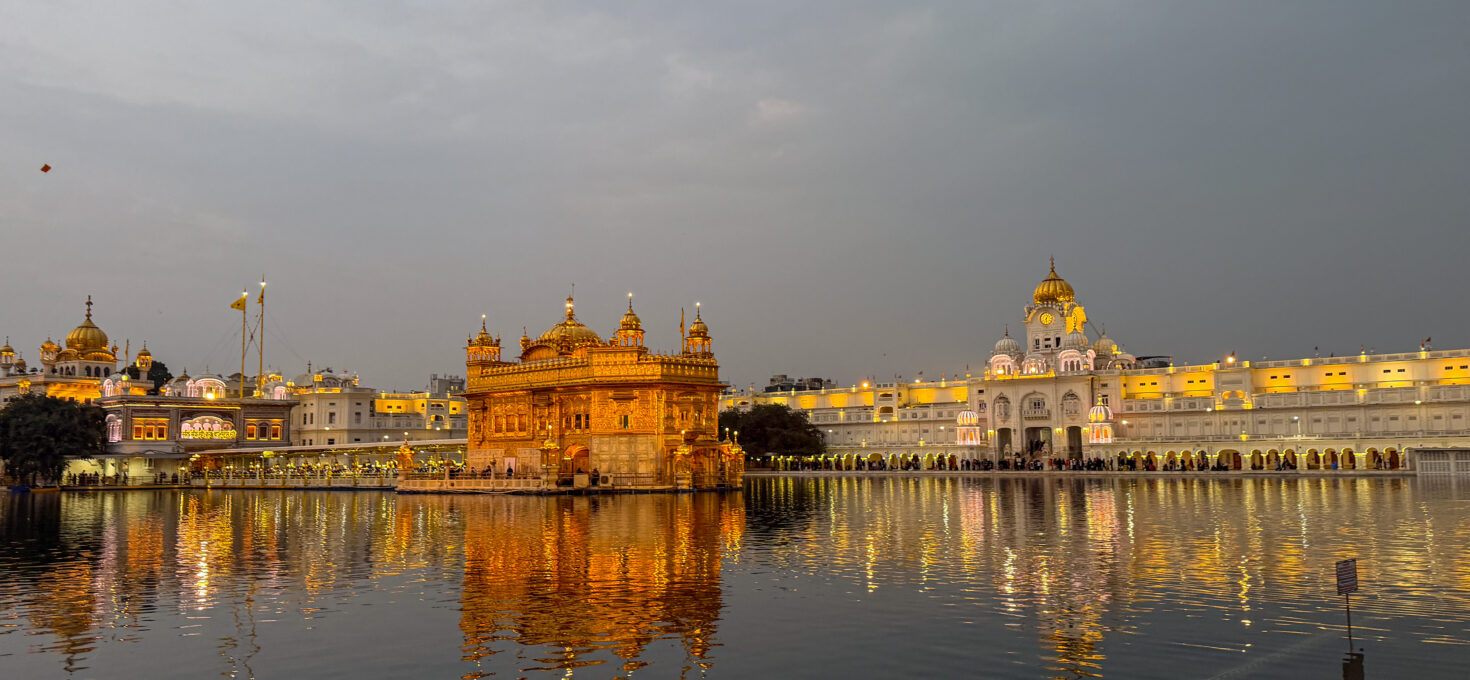
Amritsar is home to the Golden Temple, one of Sikhism’s holiest sites, known for its beautiful architecture, spiritual atmosphere and the community kitchen that feeds thousands daily. Even beyond the Temple, there is a lot to see and do in this bustling city.
Whether you are a history buff or seeking spiritual blessings or simply looking to indulge in mouthwatering Indian food, this guide is here to help you chalk out the best itinerary.
Best Way to Reach and Get Around the City
Amritsar lies in Northern India and is well connected by flight from most Indian cities. You also have a few international flights from UK and Middle East. From the airport, you can easily book an UBER to get to the city center.
You can also reach Amritsar via train and buses from some northern cities like Delhi, Chandigarh, Katra.
Once you reach the hotel, you can get around the city using autorickshaws and UBERs. Autorickshaws don’t use meters and will try to fleece you by quoting higher rates. So always negotiate, but expect to pay INR 10-20 per person for a 5-10-minute ride. Or INR 100 per ride for slightly farther distances.
How Many Days Required
You need at least two full days to see and eat all that this city has to offer. If you are a shopper, then add one more day since the markets here are a shoppers’ paradise 😍
Best time to visit
From October to March, weather is cooler and makes for the perfect time to visit. Diwali, Guru Nanak Jayanti and Baisakhi (the Sikh New Year) are other popular festival times to visit.
We visited in January end and weather was in the range of 8 degrees to 15 degrees C. We loved the cooler weather and made strolling around the city more enjoyable.
Where to Stay
You will find a good range of budget as well as luxurious accommodations. There are a few hotels within walking distance to the temple, but they are pretty basic. Taj Swarna and Welcomehotel ITC, Raja Sansi are popular hotels as well but both involve a 30-40 minute ride to the temple.
We stayed at Fairfield by Marriott hotel near Amritsar’s railway station area. It took us barely 10 minutes to get to the temple and other areas of interest. It was perfect !
Things to Do/ Places to See
Golden Temple
The original name of this temple is Sri Harmandir Sahib. It started being called the Golden Temple when Raja Ranjit Singh overlaid the sanctum in gold leaf in 1830.
The Golden Temple has a unique architecture. Built at a level lower than the surrounding land level, this Gurudwara teaches the lesson of humility. The four entrances of this holy shrine from all four directions, signify that people belonging to every walk of life are equally welcome. Sikhs practice three principles in life – truthful living, service to humanity and devotion to God.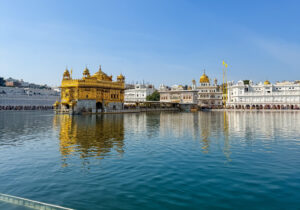
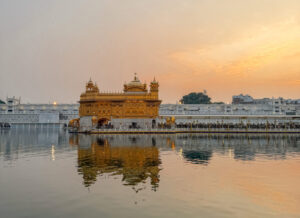
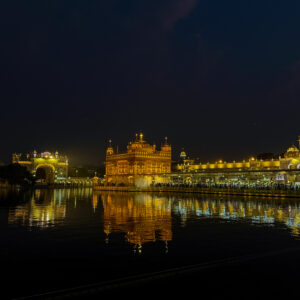
At any time of the day, expect a long queue to get inside the temple. We waited around 45 minutes to get in but can easily take 2-2.5 hours as well. Visit during daytime as well as during sunset. Day time is busier and in evenings, there is a calm atmosphere with Keertans playing in the background. And then as the sun sets, you get to see the temple shining at night!
One other time to visit is during Prakash ceremony – when the holy scripture (Guru Granth Sahib) is brought from the Akal Takht to the sanctum. It typically takes place around 4 am – 4.30 am depending on the season. This Granth is carried back to the Akal Takht between 10 pm – 11 pm.
After you have sought blessings at the shrine, walk around the temple complex and sacred Dukh Bhanjani Ber tree. This ancient tree has stood for over 400 years and holds deep spiritual significance. It is believed that a Sikh devotee was cured of leprosy after bathing in the Amrit Sarovar near the tree, giving it the name Dukh Bhanjani, meaning “remover of suffering.” Baba Buddha Ji, who served as the first head priest of the Golden Temple, is said to have meditated here, blessing devotees and guiding them in their faith. Today, pilgrims sit in its shade, offering prayers and taking a holy dip in the water.
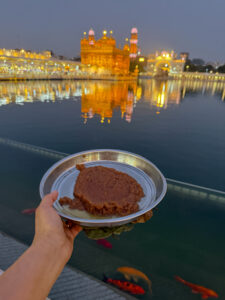
Don’t forget to get Karah Parshad. It is a sacred sweet offering (halwa) made from whole wheat flour, ghee, sugar and water, and served to all visitors as a divine blessing.
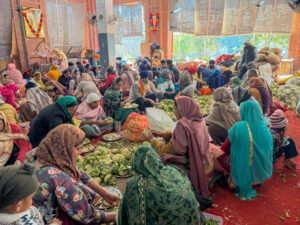
Once you are done, check out the langar, a free community meal which feeds thousands of people every day regardless of their faith. It runs 24 hours a day, every day of the year. What is astonishing is that the langar is completely managed by devotees – from chopping vegetables to preparing food to washing the utensils to serving the devotees. Even if you don’t want to eat, simply check it out and I guarantee you will be in awe!
Ensure you dress modestly – no shorts and skirts allowed. You also need to cover your head with a scarf, handkerchief or dupatta. If you don’t have one, you can borrow the free ones available at the entrance. Also, you are required to wash your hands and feet before you enter the temple. Most of the times you will be walking barefoot on marble floor (there are carpets at few spots as well) which can be freezing in winter months.
Partition Museum
In August 1947, British India was divided into India and Pakistan. The partition lines, drawn on a map by the British lawyer Cyril Radcliffe, divided the province of Punjab and Bengal into two parts on the basis of religion. As a result, millions of people found themselves on the wrong side of the border overnight. According to various estimates, more than 800,000 Muslims, Hindus, and Sikhs were killed in the riots that followed the partition between August 1947 to January 1948. Additionally, more than 1,400,000 people became refugees.
This museum sheds light on the poignant history of India’s partition through letters, photographs, and survivor stories. You will also find newspaper cuttings, audio-visual recordings and real stories from the survivors.
Entry fee is INR 10 per person – remember to carry your Indian id / show photo on phone.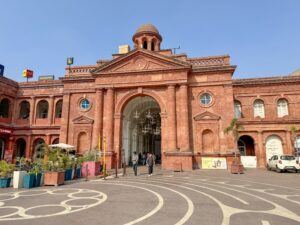
Jallianwala Bagh
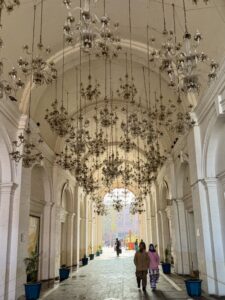
Jallianwala Bagh is a public garden that stands as a memorial to one of the darkest chapters of British colonial rule. On April 13, 1919, the day of Baisakhi, several people had gathered at Jallianwala Bagh. In a heinous act of violence, a British officer, General Dyer opened fire at the peaceful gathering after blocking off the exit. Fearing their lives, most Indians jumped into a well one over another, killing everyone! While the British official committee cited 379 deaths, the actual number was more than 1,000 and another 1,000 more wounded😞
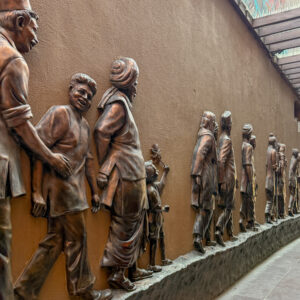
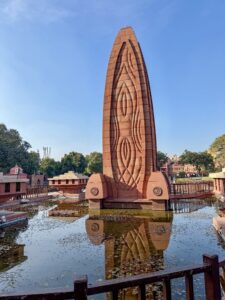
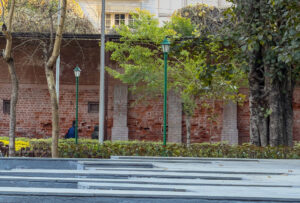
This tragedy became a turning point in India’s struggle for Independence. The bullet marks on the walls and the Martyrs’ Well, where people jumped to escape the gunfire, are haunting reminders of the past. Take a quiet moment here to honor the martyrs.
Wagah Border/ Attari
Around 30 kms from Amritsar, at the border between India and Pakistan, every evening, India’s Border Security Force (‘BSF’) and Pakistan’s Rangers hold a grand ceremony. It begins with battle calls from both sides in the form of loud screaming by the border guards. This is followed by a series of organized high kicks, stomps, and dance moves during which the opposing forces stare each other down. The electrifying energy of BSF and the crowd makes it an unforgettable experience. This ceremony started in 1959 and has continued over the years.
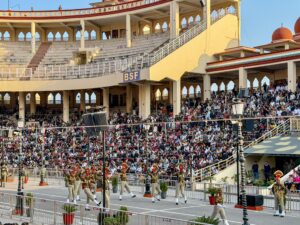
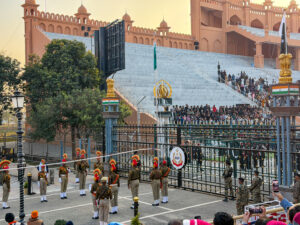
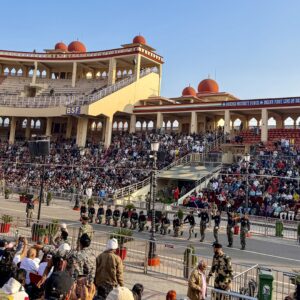
The flag lowering ceremony is held each evening immediately before sunset. To reach Wagah Border from Amritsar, you can take a shared cab, auto-rickshaw, or hire a private taxi, and takes around 45 minutes to an hour. We hired a private taxi and paid INR 2,300 for a roundtrip ride.
The stadium has a capacity of 50,000 people and entry opens at around 2-2.30 pm. Entry is free of cost and seating is on first come first serve basis. During winters, the actual ceremony starts at 4.30 pm and lasts 30 mins. Before the start of the ceremony, some cultural programmes are held, where spectators are often called upon to dance to patriotic music.
If you are traveling in winter months, the drive is pretty with mustard fields lined on both sides of the road. There are also some other landmarks and monuments enroute – India Gate, War Heroes Museum. If you wish you visit them, start your drive early.
Shop at Local Markets
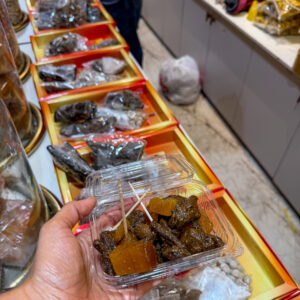
Phulkari dupattas and juttis (shoes) are the most popular items to buy. Apart from that, papads and wari are the local food items worth buying for yourself or friends and family back home.
There are three major markets where one can shop for phulkaris, salwar kurtas and juttis – Hall Bazaar, Heritage Street, Katra Jaimal Singh Bazaar and Guru Bazaar. Make sure you have extra space in your luggage 😉
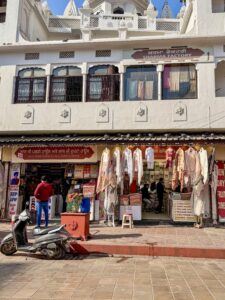
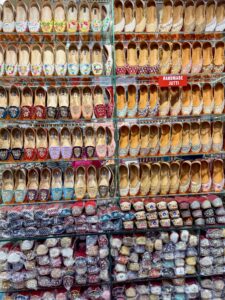
Most autorickshaw guys will insist on taking you to wholesale markets or other stores that they say give the best price. Do NOT fall for this trap since they generally get a commission from such stores.
Other Temples to Visit
While Golden Temple is a place of worship for Sikhs, there are a couple Hindu temples in this town as well.
Durgiana Temple is a temple dedicated to Goddess Durga and often called “Mini Golden Temple” due to its similar architectural style. In addition to Goddess Durga, you will also find shrines for Lakshmi-Narayan, Shiva, Hanuman.
Ram Tirath Ashram – According to mythology, Lord Ram’s two sons – Luv and Kush took birth here. Though the original Ashram is no longer here, a temple stands in its place.
Mata Lal Devi Temple is another unique temple known for its cave-like passages and mirrored walls.
Shani Devji Mandir is right outside Golden Temple so an easy one to visit.
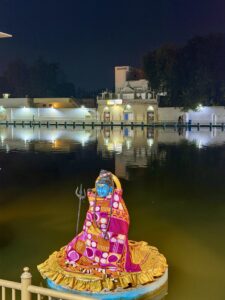
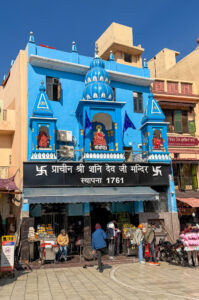
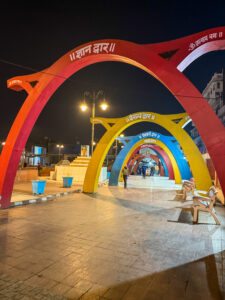
Gobindgarh Fort
Every evening a light and sound show takes place here. We did not have time to visit so skipped it, but if you need more information click here.
Indulge in Local Delicacies
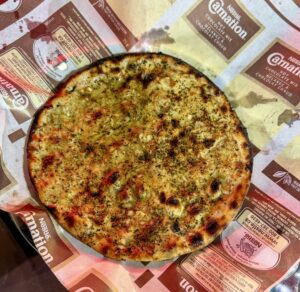
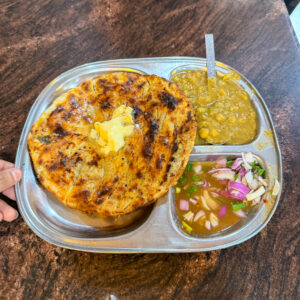
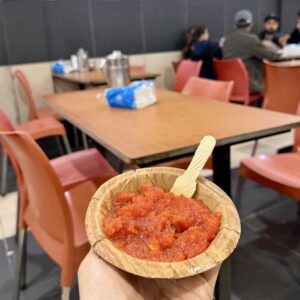
Kulchas, parathas, chana, rajma, paneer bhurji, phirni, gulab jamun, jalebis, gud ka halwa, lassi phew the list is endless. If you are a foodie, you are going to be in food heaven.
Here are list of local places we ate at and some based on recommendations from friends and family:
- Arshi Kulcha
- Kanha Sweets
- Brothers Dhaba
- Ram Patty Kulcha
- Pehelwan Dhaba
- Kesar Da Dhaba
- Kulcha Land
- Heera Paneer wala
- Shree Piyare Lal Paneer Bhurji
- Gurdas Ram Jalebiwala
- A one Kulfa
- Gian di Lassi
- Giani Tea Stall for Badam pista chai
- Ahuja di Lassi
- Sharma Sweets for mini gulab jamun
- Lubhaya Ram’s Aam Papad Chaat
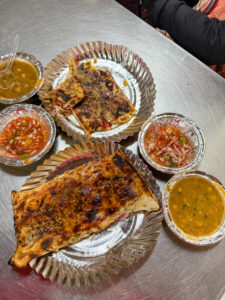
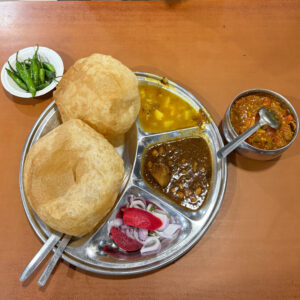
I guarantee you will be in food coma by the end of your trip 😊
Other Places to Visit
If you have more time on hand, you can add either or all these below places to your itinerary and make it a week long trip !
- Dharamshala
- Bir Billing
- Dalhousie
They involve at least a 4.5 – 5 hour drive from Amritsar.
*All prices as of January 2026