Barcelona is the most popular tourist destination in Spain and on most people’s bucket lists but for me, Seville topped the list!
Located in the heart of Andalusia, Seville blends Moorish architecture, lively plazas, cute orange tree lined streets and gazillion bars, cafes and restaurants. Sevilla is one of those cities that you instantly fall in love with. Oh and this city truly is a photographer’s delight!
If you are planning a trip to southern Spain, this blog covers the perfect mix of iconic landmarks, hidden gems and authentic local experiences.
How Many Days Required?
The historic center is compact, so you can cover most sights in 1.5-2 days. But I would recommend adding at least a day to include a day trip to some of the beautiful towns nearby. There are several unique towns just a short train / bus ride/ drive from Seville (more on that later).
Also, the streets of Seville are so utterly charming and an extra day gives you more time to just aimlessly wander around the narrow streets and discover many hidden gems without rushing in.
Another important thing – Seville takes siesta hours very seriously. So, many shops, restaurants and some sights close in the afternoon. There are chances of missing many places if you in Seville for fewer days.
How To Reach Seville
Depending on where you are coming from, you can arrive in Seville by plane, train, or bus.
We visited Seville as part of our 2-week road trip to Spain. We rented a car immediately as we arrived at Madrid airport and started our journey. We spent a few days in Córdoba before reaching Seville. For a detailed guide on all Spanish cities we visited on this trip, please click here.
Like us, if you are driving into Seville, note that the streets here are very narrow and unlike other Spanish cities, street parking is limited. So, it is advisable to park your car in a garage.
Where to Stay?
For first time travelers, the city center / Old Town is the perfect place to stay. It has tons of restaurants and shops, and you will be in the heart of action.
Bario Santa Cruz is another charming neighborhood. Most sights are withing walking distance. Triana Neighborhood is another area where most tourists stay but I wouldn’t recommend it since it is a bit far from the city center.
We stayed at this lovely Airbnb in Alfalfa neighborhood, which is a vibrant, historic quarter in the heart of old town. Since we were traveling with friends, we needed a bigger apartment. So this Airbnb may not be ideal for you, but you can look for apartments in this neighborhood.
One key tip – if you are visiting in warmer months, ensure your accommodation has an Air Conditioner.
How to get around Seville?
Seville city is compact and best explored on foot. Most places are within walking distance in the historic center. You can also use buses and taxis, both of which are pretty economical.
Best time to Visit?
The best time to visit Seville is during spring (March–early May) or fall (late September–early November). The weather is pleasant and the crowds are manageable. Semana Santa de Sevilla (Holy Week in Seville) runs from Palm Sunday to Easter Sunday is a great time to visit Seville since it provides a very unique experience. In 2027, Semana Santa de Sevilla is expected to run from March 21 to March 28.
Avoid the summer months unless you LOVE the heat 🙃 It can reach over 40 degrees Celsius, especially in July and August. It is almost impossible to roam around the city in the afternoons and that is why you will find many businesses close in the afternoon.
We visited in mid-September the temperature was around 35 degrees C. We braced ourselves and headed out to explore but were almost dead by the end of it! We rarely come back to our hotel / accommodation once we step out in the morning but in Seville, we had no option but to come back and rest in AC 😉
Winters aren’t very brutal here – temperatures are generally in the range of 15-18 degree Celsius. So, if you don’t mind this cool weather then, Seville makes for a great winter destination too.
Pro Tip
Before we delve into the specifics, the first thing you need to do as soon as you book your trip to Seville, is book tickets for major attractions and sights that you want to visit. Some of these places have limited spaces and may get sold out weeks or even months in advance. Especially, the Royal Alcázar, Seville Cathedral, La Giralda Tower and Setas de Seville.
If the entrance tickets are sold out, you can opt for guided tours. They tend to be more expensive but provide a better historical context.
Things to Do and Places to See
Real Alcázar / Royal Alcázar
Located in the heart of Seville is the Alcázar of Seville, officially called Royal Alcázar of Seville. It is one of the official residences of the Spanish royal family.
Originally constructed by Muslim kings in the 10th century, the Alcázar has been renovated over the centuries, influenced by both Christian and Moorish architecture. Its intricate blend of styles reflects Seville’s history as a crossroads of cultures, where Christian, Muslim, and Jewish influences have shaped its unique design.
From its origins as a fortress to its transformation into a royal residence, the Alcázar’s architectural beauty is worth seeing in person. You will find countless rooms, tiled courtyards with fountains, and exquisite gardens, transporting you back to 14th century.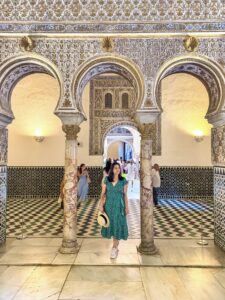
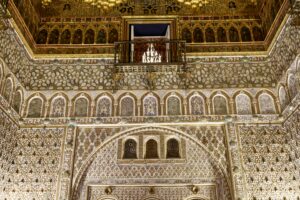
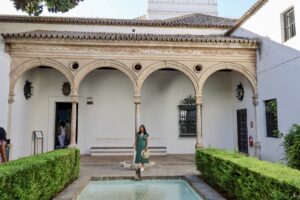
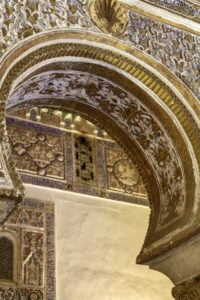
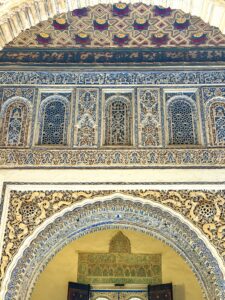
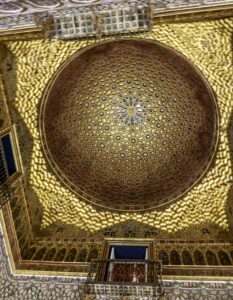
My favorite place here was Patio de las Doncellas, the central courtyard featuring a long reflecting pool, sunken gardens, and intricate Mudéjar stucco arches and tilework. The details here are simply breathtaking.
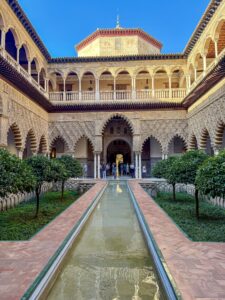
Whether you’re an art lover, a history enthusiast or simply someone who enjoys soaking in the beauty of unique places, the Alcázar offers something for everyone. It was registered as a World Heritage Site in 1987 by UNESCO.
Be sure to book tickets online in advance for the Royal Alcázar especially if you are visiting between April – October.
The Real Alcázar has two entrance tickets. The general tour will give you access to the halls, courtyards, and gardens. Apart from the general entry ticket, there are also tickets to visit the the Royal Rooms, the official residence of the monarchs when they visit. So, if you want to see them, then make sure your ticket includes access to the Upper Royal Palace. The general ticket includes an audio guide but if you want to learn more you can always sign up for a guided tour.
If you have booked tickets online, ensure to bring your passport or national ID card since a photo ID is required for entry. The palace rooms and gardens are both vast and you can easily spend 2-3 hours.
On Mondays, the palace offers free admission. While the entry is free, you must reserve these tickets online in advance. A processing fee of €1 is levied.
While the Royal Palace is beautiful, the gardens here are equally impressive ! The gardens are planted in a traditional Islamic style, blended with Renaissance and Baroque additions. There are countless plants, trees, flowers, benches, fountains, maze, and if you are lucky, you can even spot peacocks. From the gardens you can also access the Banos de Maria de Padilla, a massive underground vault once used for swimming.
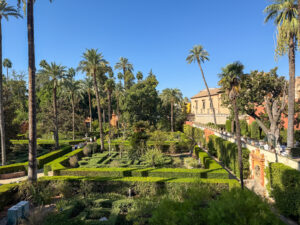
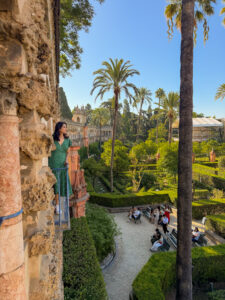
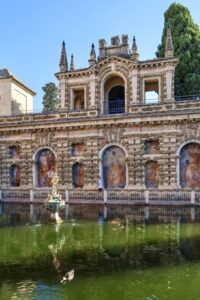
Game of Thrones fans will recognize it as the filming location for the Water Gardens of Dorne.
Seville Cathedral and Giralda Tower
Just a few minutes’ walk from the Royal Alcázar, lies Santa Maria de la Sede, also known as Seville Cathedral. It holds the title of the largest Gothic cathedral in the world.
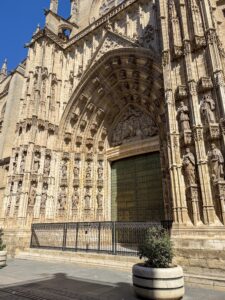
Inside the Cathedral, you will find grand altars, historic tombs, and ornate chapels. This is also where Christopher Columbus is buried. Along with the Alcázar, this is also a UNESCO World Heritage site.
Part of the building used to be a mosque during Moorish times and the bell tower, La Giralda, used to be a minaret for call to prayer. It stands tall in the heart of Seville and hard to miss.
After you are done visiting the Cathedral, climb the Giralda Tower for panoramic view of the city. There are no stairs here, but you actually walk up a series of ramps. It takes 15-20 minutes to get to the top.
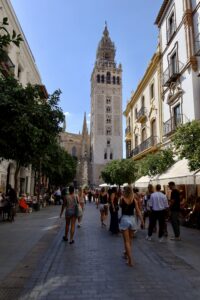
Tickets for La Giralda are included in the general admission ticket of the Cathedral. You also buy combo tickets for the Alcázar, Cathedral and Giralda Tower. So, if you are keen on visiting all of them, then buy that to save some Euros.
On your way out, check out the beautiful Patio de los Naranjos (Orange Tree Courtyard), a remnant of the mosque that originally stood on the site.
Plaza de España
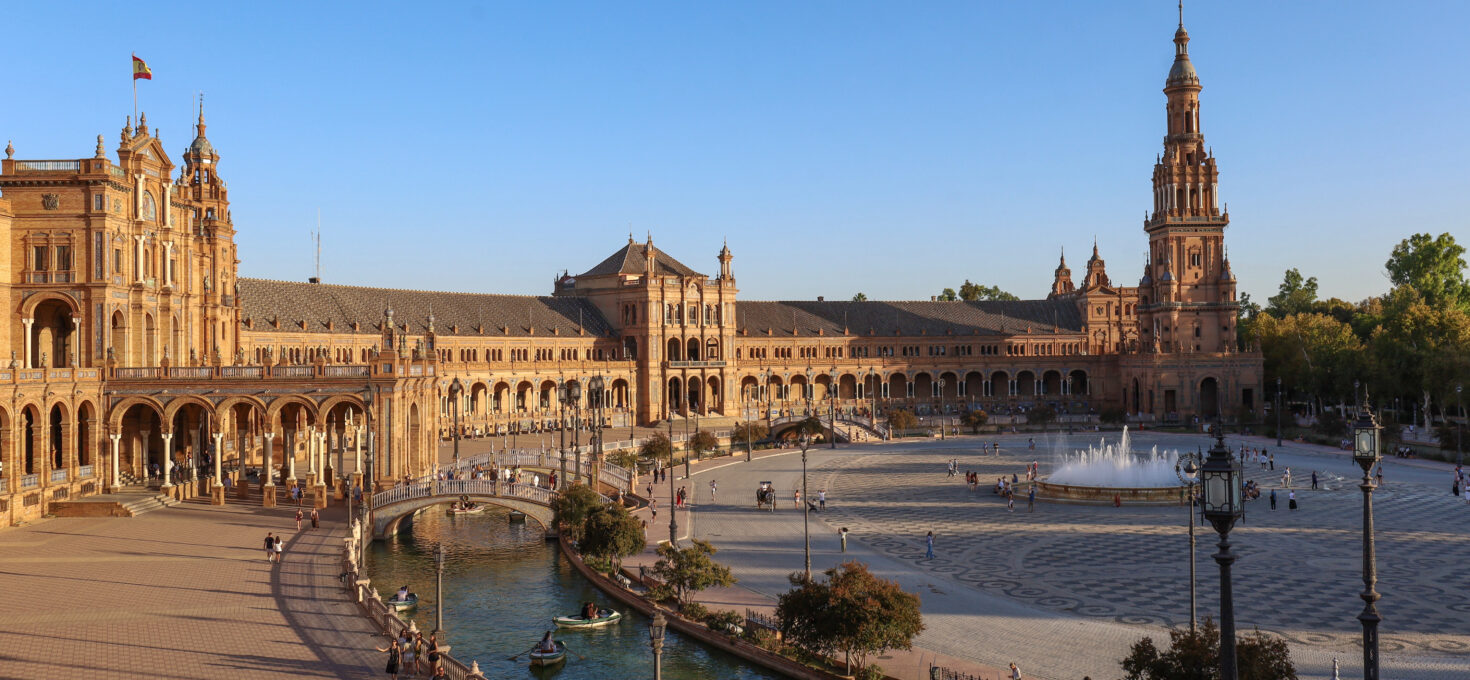
After the Alcázar, Plaza de España is one of the most iconic landmarks in Seville and probably all of Spain. The moment you step here, you will see why.
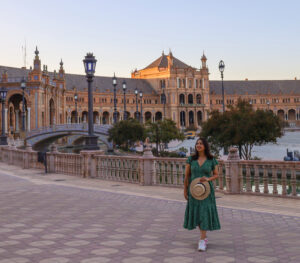
The plaza’s semi-circular shape represents Spain embracing its former colonies, with a canal symbolizing the ocean connecting Spain to the Americas. It was built in 1928 for the Ibero-American Exposition of 1929. 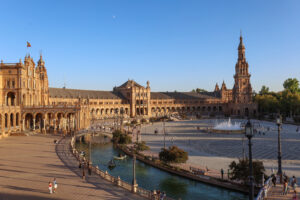
It combines elements of Renaissance Revival and Moorish Revival styles, showcasing intricate tilework, beautiful bridges, and stunning architecture.
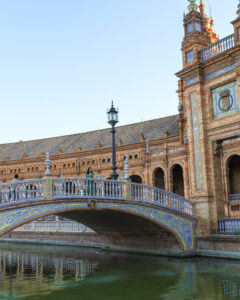
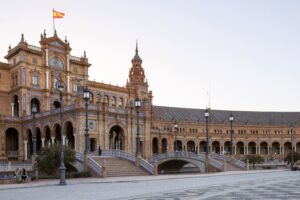
Don’t forget to check out the alcoves along its walls, each representing a different province of Spain through ceramic tile murals and benches.
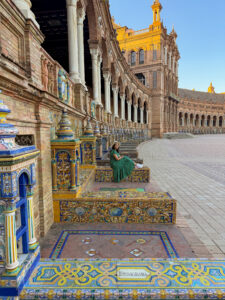
Between the canal, the arched bridges and the mix of Moorish and Renaissance styles, it is a photographer’s dream and one of the most stunning plazas I’ve ever been in! A little fun fact – Plaza de España has served as a backdrop for numerous films, most notably appearing in Star Wars Movie.
You can easily spend an hour or more here walking around enjoying the views and people watching. If you are lucky, you may be able to even watch flamenco performances for free in the plaza.
You can also take a ride in a horse carriage or row a boat along the canal in warmer months. A 30-minute boat ride costs just €6.
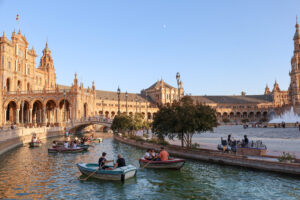
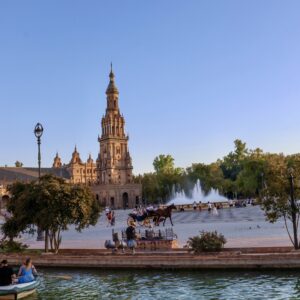
This plaza was topping my bucket list when I first planned my trip to Seville. As you can see from the above photos, I visited Plaza de España early in the morning to watch the sunrise as well as sunset. The good thing is that sunrise wasn’t at an ungodly hour so it was easy to get here on time 😉 There were barely any people and it was quiet, peaceful and let me take in the beauty without rushing in. And the golden light during sunset was simply breathtaking!
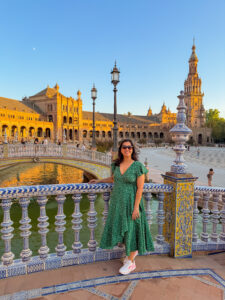
Parque de María Luisa
The Parque de María Luisa is right next to the Plaza de España. This park provides cool relief on hot days, thanks to the shady footpaths, fountains and numerous Mediterranean trees and colorful flowers. After you are done exploring Plaza de España, you can spend a couple minutes here.
Metropol Parasol
Metropol Parasol, also known as Las Setas de Sevilla (“Setas”) is a relatively new and modern structure opened in 2011. This mushroom-shaped structure is the world’s largest wooden structure.
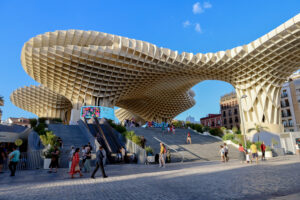
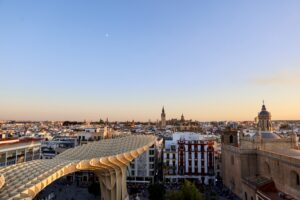
The walkway on top provides a panoramic view of Seville’s old city and a completely different perspective of Seville’s rooftops, old town and church domes. This is a bit of a controversial attraction given its modern architecture, but the views from above are absolutely stunning!
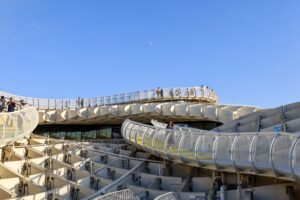
If you want to climb the walkway at the top, you need to buy tickets. While you can buy tickets at the entrance, secure your slot, it is advisable to buy them in advance. Tickets cost €16 and can be purchased via the official Setas de Sevilla website.
About 45 minutes to 1 hour before sunset, make your way to Las Setas. It is the most beautiful time to visit and see a 360° view of the city bathed in a golden glow. Recommend checking the sunset time before booking your slot since it can vary based on the month.

There is an Aurora light show which happens every night around 9.30 pm (at least when we visited in September 2026). It is absolutely SPECTACULAR !
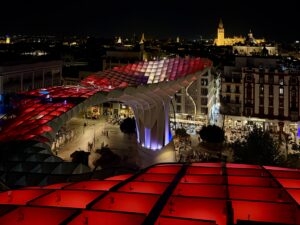

The best thing about buying tickets to Setas is that this ticket gives you a chance to revisit within 48 hours of your first entry. I would recommend buying tickets for the sunset slot and then stick around until the lights come on. Or roam around the city and come back the next day. Your second visit can even be during daytime since it gives a completely different perspective.
As you leave Setas, walk down Calle Regina. This street and area has some lovely cafes like Virgen Coffee, MUY Coffee and plenty of restaurants and bars. This is the heart of the Feria Barrio, the hipster/artsy neighborhood. Bar Pitacasso, Zoco and Fatouch are some lovely restaurants in this neighborhood.
Other Lesser-Known Places to Visit
While Alcázar is undoubtedly the most opulent and grand palace in Seville, here are some lesser-known places to visit which are equally beautiful.
Casa de Pilatos is a beautiful Andalusian palace which reflects a mix of Mudéjar, Gothic, and Italian Renaissance styles. Construction began in 1483 and was completed in the early 16th century. This one serves as the permanent residence of the Dukes of Medinaceli.
This 16th-century Renaissance mansion is one of the best examples of a civil, as opposed to royal palace in Seville. Part of the palace is open to the public, while a separate wing serves as the residence of the Dukes of Medinaceli. Entry fee costs €13-19.
It may not be as opulent as Real Alcázar, but still beautiful and worth visiting.
Palacio de las Dueñas is a palace currently belonging to the House of Alba. It was built in the late 15th century in the Renaissance style with Gothic and Moorish influences. The palace is one of the major historic homes of great architectural and artistic heritage in the city. Entry fee costs €15.
The palace consists of a series of courtyards and buildings. The style ranges from Gothic, to Moorish, to the Renaissance, with local influences in the bricks, shingles, tiles, whitewashed walls, and pottery.
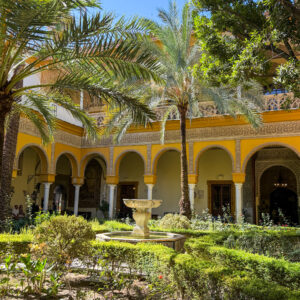
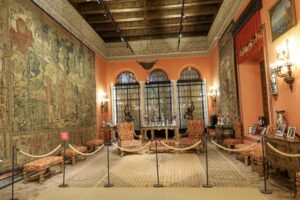
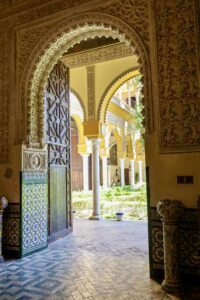
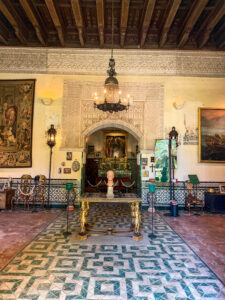
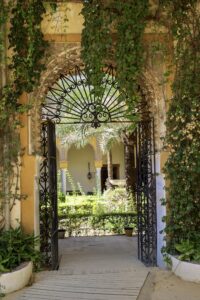
The gardens here are very beautiful too since blend Renaissance and Islamic styles and feature a diverse collection of plant species and floral arrangements from around the globe.
Unlike the Alcázar, both Casa de Pilatos and Palacio de las Dueñas are not widely known among tourists. So, it is easy to get tickets at the last minute and makes for a much peaceful experience. If tickets to Alcázar are sold out on the dates of your visit, then these both make a great alternative.
Also, both places are blooming with bougainvillea and other flowers during spring months so if you are in Seville then, don’t skip them.
Explore Barrio Santa Cruz – Jewish quarter
The Barrio Santa Cruz is the historic and scenic former Jewish quarter of Seville, Spain, known for its labyrinth of narrow cobblestone alleys, whitewashed houses, and shaded plazas.
You can wander around or enjoy one of the many restaurants or squares. This is the heart of Seville and many of the important sights are literally a stone’s throw away.
Plaza de Triunfo, Plaza del Salvador, Plaza de la Encarnación, Plaza de San Francisco are some popular squares with several outdoor tapas bars and the perfect place to hang out in between all your sightseeing.
Plaza de Cabildo
Tucked away near the Cathedral is a beautiful semi-circular square with marble columns, decorative arches and ceiling frescoes painted by artist José Palomar. A central fountain and palm trees offer a quiet escape from the busy surrounding streets.
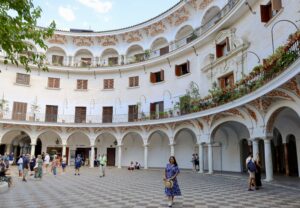
Every Sunday morning, the square transforms into a lively market for collectors trading stamps, old coins, banknotes, military insignia, and archaeological pieces
Yemas de San Leandro (Nun Sweets)
One unique thing to do in Seville that you can buy yemas (sweets) from cloistered nuns. These nun’s sweets have become famous (thanks to social media) because of their unusual sales technique. The way it works is that you read the menu on the wall, ring a bell, place your money (cash only) on the rotating turntable (torno), and receive the sweets and your change.
Real Monasterio de Santa Inés and Convento de San Leandro are two popular places in the city. They are usually closed in the afternoons and on Sundays so check the timings on Google before visiting.
I reached Seville on Saturday afternoon had booked tickets for Setas in the evening. And since they were closed the next day, I missed this experience😞
Explore Triana
Cross Puente de Triana bridge to enter the Triana neighborhood. This neighborhood has a quiet and residential feel and provides a completely different experience.
Once you cross the bridge, you’ll walk right by Mercado de Triana, a small indoor market filled with stalls selling fruits, vegetables, meats, etc.
You can even go on a boat tour along the river or simply grab drinks by the river like we did 😊 The boat cruises around the historic Triana neighborhood and the Guadalquivir River and offer scenic views of the city’s iconic bridges, architecture, and landmarks.

You will find several bars lining up the riverfront. We had drinks at Muelle New York.
Torre del Oro
Standing 36 metres tall on the banks of Guadalquivir River, this medieval military watchtower was built in 1220 to control shipping traffic and defend the city’s port. Today, it houses a two-story Naval Museum and features a panoramic rooftop terrace offering 360-degree views of the riverfront and city skyline
Tickets cost €3 and entry is free on Mondays. This one is worth skipping if you are short on time.
Archivo de Indias
The Archivo General de Indias contains more than 10 kilometres of bookshelves with documents from the colonial history of ‘Las Indias, or the New World’, from the 16th to 19th centuries. It serves as a repository of most important records, maps and letters of Spanish colonialism in America and is one of the UNESCO sites in Seville.
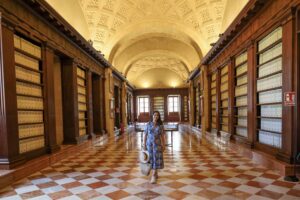
It is located right opposite the Cathedral and admission inside is FREE so is an easy addition to your Seville itinerary.
Watch a Flamenco Show
Flamenco dance originated in Spain’s Andalusia region. A great way to immerse yourself in the culture is by watching a live flamenco performance. You will find several flamenco performances in the city.
Restaurants, Cafes and Food to Try
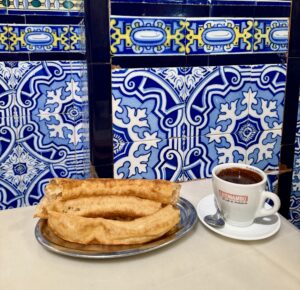
Churros originated in Spain and Portugal and a must try when in this city. They are a type of fried dough piped into a sausage shape. And they are crispy outside but soft inside.
Churros are not actually a dessert. They are traditionally enjoyed in Spain either for breakfast with coffee, or as an afternoon snack with hot chocolate.I had my first churros in Spain at the lovely Bar El Comercio, which has a well-earned reputation for the best churros in Seville.
For coffee, head to Virgen Coffee, Plaser Coffee (pictured below), MUY Coffee, Syra Coffee, Late Specialty Cafe.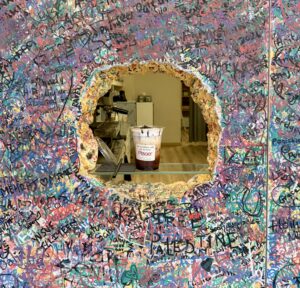
For breakfast, check out Jester, Billy Brunch, Milk Away, Mokambo, Filo.
We visited Seville on a weekend and not sure if that’s how busy the city is generally, or that weekend was an exception. Most restaurants were FULL and refused to seat us since we didn’t have a reservation. We ended up eating on the go. Here is where we dined:
- Bar Pitaccaso (had to literally plead them to give us takeaway since they were full)
- Slice of NY pizza
- La Tradizionale
- TaKool for Mexican food
As a vegetarian, here are some Seville local specialties worth trying:
- Espinacas con garbanzos – It is made up of spinach and chickpeas simmered in garlic and tomato sauce that’s scented with cumin, smoked paprika, and sherry vinegar, then thickened with fried bread.
- Pimientos de Padron – They are basically fried chillies sprinkled with sea salt.
- Gazpacho is the perfect way to cool down in Seville’s hot weather.
- Salmorejo – It is thicker and richer than gazpacho.
- Ajo blanco – It is a blend of Marcona almonds, bread and just a hint of garlic. Served with a garnish of grapes, it’s the perfect blend of sweet and savory.
For drinks, here is what you can try:
- Cruzcampo – The city’s signature local lager, brewed in Seville since 1904.
- Rebujito – It combines Manzanilla sherry with lemon-lime soda (like 7Up or Sprite), fresh mint, and plenty of ice.
- Tinto de Verano – Literally translates to “summer red wine” and this is what locals order instead of Sangria. It mixes table red wine with La Casera or lemon soda over ice, garnished with a slice of citrus.
- Vino de Naranja (Orange Wine): A sweet, dark Andalusian fortified wine made by macerating bitter orange peels in aromatic sherry for several years. It is traditionally sipped chilled as a pre-dinner aperitif.
- Vermut (Vermouth): Sweet, herb-infused fortified white wine served over ice with an orange slice and a green olive. Locals typically drink it as a traditional pre-lunch aperitif.
If you have a sweet tooth like me, then here are couple places for you:
- Chök
- Mito Gelateria
- La Tarta de la Madre de Cris
- 99 Cheesecake
- PanyPiu
-
De Nata – Fábrica De Pastéis
If you are looking for a rooftop bar, then check out La Terraza del EME. It is close to the Cathedral and offers panoramic views of the old town.
Day Trips
If you are in Seville for more than 2 days, then consider spending a day in one of the lovely Spanish towns close to Seville.
There are plenty of cute and unique towns close to Seville and here is how you can visit them:
Cordoba
The high-speed Renfe train will take you to Cordoba in less than 45 minutes. There is a lot to see and do here but if you are short on time just visit the Mezquita aka Great Mosque of Cordoba and the Jewish quarter.
For a detailed guide on things to do in Cordoba, please click here.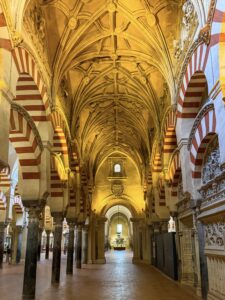
Setenil de las Bodegas
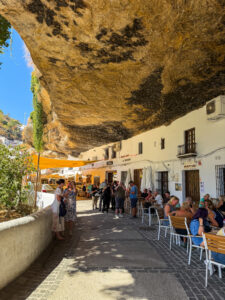
This is a unique white village (pueblo blanco) in the Cádiz province of Andalusia. What makes it unique is that you will find houses built directly under massive basalt and limestone rock.
Once you get here, walk along Calle Cuevas del Sol and Calle Cuevas de la Sombra and be prepared to walk with your jaw wide open ! It is just so unique!
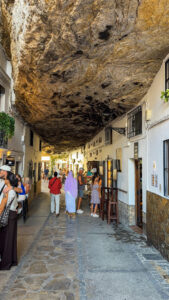 For beautiful panoramic views, head to Mirador del Carmen, Mirador Balcón de Setenil de las Bodegas and Mirador del Lizón.
This town isn’t well connected by public transport so the best way to get there is by car or bus. If you are coming by car, note that parking space is limited so either be prepared to park on the top and walk all the way to the town or come early to get a parking spot close to the town.
Of late, this town has gained a lot of popularity thanks to social media, so you will find lot of group tours here. Since the streets here are quite narrow, they can get crowded fast. So, if you want to peacefully stroll, get here before 10 am or late in the evening.
Ronda
Ronda is a dramatic mountaintop city which is split in half by the deep El Tajo gorge. This town features some of the most dramatic cliffside and gorge viewpoints in Andalusia, Spain.
Cross Puente Nuevo, the famous 18th-century stone bridge that spans the 100-meter-deep El Tajo gorge for sweeping views of the Guadalevín River.
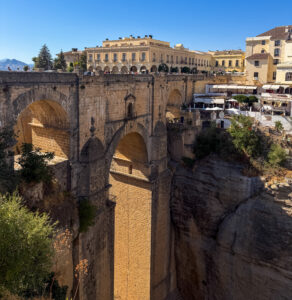
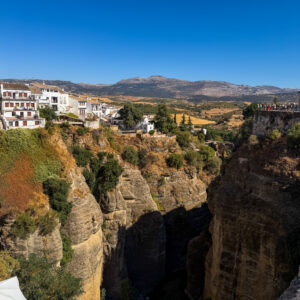
Arrabal Restaurante has a lovely outdoor terrace views facing the iconic Puente Nuevo and the deep gorge. Perfect place to grab drinks or dinner with a view.
Apart from this iconic bridge, I really enjoyed roaming around the town.
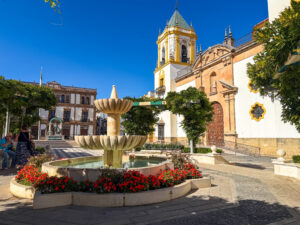
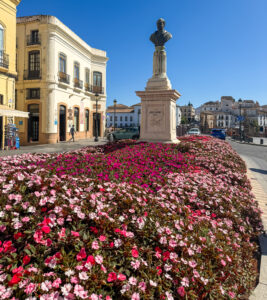
You can even visit Plaza de Toros de Ronda,one of Spain’s oldest and most historic bullrings (dating to 1785), which features an on-site museum detailing the roots of modern bullfighting.
Ronda is located just 30 minutes from Setenil de las Bodegas and an easy addition to the itinerary. Again, it is difficult to reach by public transport so you can either drive here or join a group tour which combines both the villages.
Cádiz
Looking for a beach near Seville? Then, head to Cadiz.
The pastel-colored buildings, oceanfront promenades, and historic streets create a unique atmosphere. Cádiz stands out is for its striking resemblance to Havana, earning it the nickname Little Havana.
Cádiz is approximately just under a two-hour train journey from Seville and 80-minute drive by car.
Since we were visiting Costa del Sol region after Seville, we skipped this town.
*Prices as of September 2026