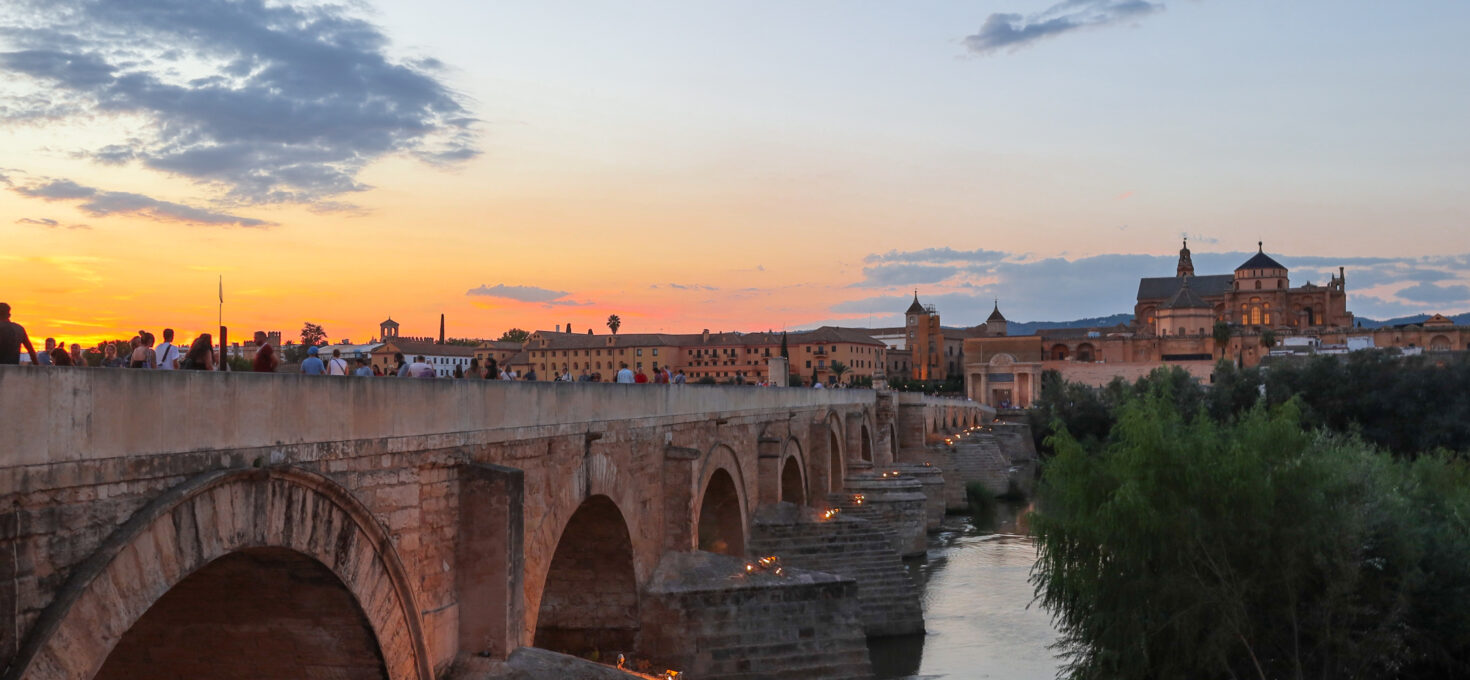
Córdoba is a historic city in Spain’s Andalucía region, primarily known for its rich Roman, Islamic and Christian heritage and Moorish architecture. Visitors from all over the world flock to Córdoba to see the unique Mosque-Cathedral and the city’s flower-filled patios. With over 2,000 years of history, and multiple UNESCO World Heritage Sites to visit, there is a lot to see and do here.
We initially added Córdoba to our itinerary simply because it fell along our route, but we were utterly captivated by its charm! Apart from the iconic Mezquita of Córdoba (primary reason why people flock to this town), there is a lot to see and do here. It was, in fact, the first Spanish town we visited and was a great place to kickstart our two-week road trip.
In this blog, you will find a quick guide on how to best plan your trip to Córdoba right from things to do and see as well as where to stay and eat.
How to reach Córdoba?
Córdoba is well connected by Spain’s high-speed train. You can easily reach Córdoba from the Spanish cities of Seville (40 minutes), Malaga (50 minutes), Madrid (2 hours), Granada (1.5 hours).
We visited Córdoba as part of our 2-week road trip to Spain. We rented a car immediately as we arrived at Madrid airport and started our journey to Córdoba. The drive took around 4.5 hours. Like us, if you are arriving by car, then keep in mind that you have to park outside the city center and walk in.
If you are only doing a short trip to this part of Spain, then Seville Airport is the closest airport here.
How Many Days Required?
With a short train ride from both Seville and Malaga (just 50 minutes), Córdoba makes for the perfect day trip. However, if you have more time on hand, I recommend staying overnight. You can see most of the sights in a day, but it can feel rushed. So, 1.5-2 days is ideal.
Best Way to Get Around?
The old town is compact and walkable. Even if you are staying slightly far, or coming via train, the walk to the town is barely 20 minutes. And if you don’t feel like walking, you can hop on a bus as well. Tickets cost €1.6 per ride.
Where to Stay?
Staying in the old town is ideal since everything will be a short walk away. But note that most of the old town is pedestrian only. So, you will need to drag your suitcases along cobblestone streets which can be so much fun 😑
Also, since it is filled with day trippers, it can get very noisy and crowded. If you want a peaceful stay but still be a stone’s throw away from all the action, then look for accommodation in San Basilio neighborhood. This is Córdoba’s prettiest neighborhood filled with flower draped courtyards and picturesque streets. It is also where the famous Festival de los Patios is held.
We ended up using our Marriott points and stayed at AC Hotel Córdoba by Marriott. It was just a 2-minute walk from the train station and a 20-25 minute walk to most points of interest in the city.
Best time to Visit?
Spring (March to May) is the best time to visit. The orange trees and flowers are in full bloom. Even in spring months, May is the best time to visit since the Festival de los Patios is held then. The dates vary each year but it typically takes place in the first two weeks of May. It is also the busiest time so expect inflated hotel rates and lots of crowds.
Summer (June to September) – Honestly, AVOID these months at all costs! Córdoba is one of the hottest cities in Spain with temperatures rising to even 40 degrees on some days. We were here in mid-September hoping for the weather to cool down a bit. But sadly, the temperatures were 33-35 degrees Celsius during the day 😞
Autumn (October and November) – After spring, this is a better time to visit. Weather is pleasant and hotel prices drop.
Winter (December to February) – This region doesn’t experience harsh winters. Day time temperatures are around 15 degrees Celsius but it does get a lot cooler at night. So, if you don’t mind exploring in cool weather, then winter is a great alternative.
Things to Do and Places to See
Mezquita Cathedral de Córdoba
Most people visit Córdoba for this place and rightly so ! This is one of the most unique places in Europe and should be topping your Córdoba itinerary.
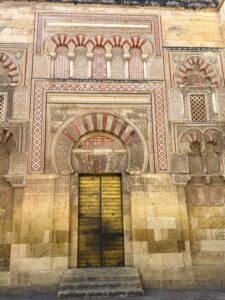
What makes this place unique? Oh well, the Mezquita Cathedral is essentially a mosque cathedral – yes, you read that right! Construction on the mosque originally began in 785, when Córdoba was an Islamic city. After the Christians conquered it, they transformed the mosque into a cathedral. Thankfully, they did not tear down the original mosque but rather built a cathedral inside it. So, what you see here today is a mix of Islamic and Christian architecture beautifully blending in here. However, it solely operates as a Catholic cathedral today.
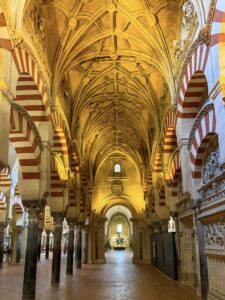
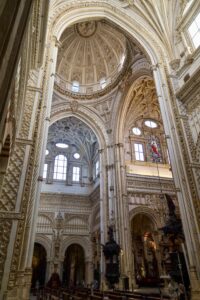
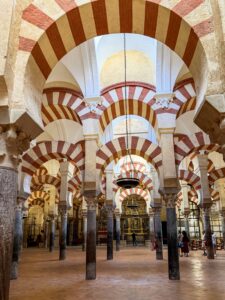
One of the most famous photo spots here which I am sure you have seen all over Instagram are the arches with their terracotta-colours and white stripes. You can find them all over the Mezquita, but they look a little different in every corner as multiple layers have been added over time.
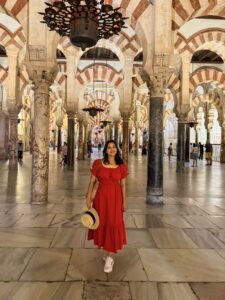
The Mezquita is the main attraction in Córdoba, so if you want to visit from inside, then advise buying tickets in advance to secure your spot. The mosque cathedral generally opens at 9.30 everyday but check the timings on the website since it varies according to the season.
Entry is FREE Monday to Saturday between 8.30 am and 9.20 am for individual visitors. This is the best time to go as entry is free and there are limited crowds. Starting at 9.20 am, entry for the public is paused, and visitors inside are asked to leave so staff can prepare the site for its official opening.
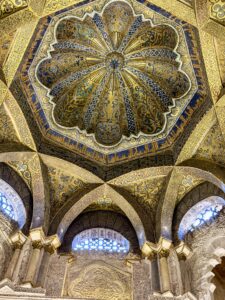
I got here around 8.45 am and there were a few people inside already. The initial arches were crowded and it was a bit difficult to take photos since the lighting wasn’t great. But as I kept walking ahead, I found there are so many different arches and found quite a few empty for those solo shots 😉 Also, take your time admiring the little details and the ceilings, every corner here is just incredible!
Patio de Los Naranjos
When visiting and exiting the Mezquita, you will pass the beautiful Patio de Los Naranjos aka Orange Tree Courtyard. Featuring planted cypress and orange trees, this beautiful square is a great stop on your Córdoba itinerary. Sadly, the oranges start growing on trees sometime in late November or early December so we didn’t catch them, but it was a lovely courtyard, nonetheless.
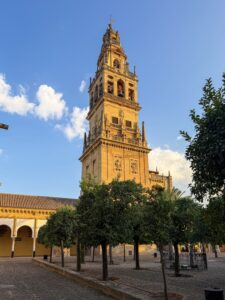
If you have time, you can also climb the bell tower for an additional fee of €4. From the top, you look out over the Orange Tree Courtyard and the old town. Access is for a particular time slot and is limited to a certain number of people. Click here for more information.
Old Town and Jewish Quarter
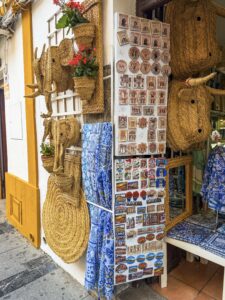
Judería, a former Jewish quarter, is a beautiful labyrinth of cobblestone streets and white houses. Here you will find tons of cafes, souvenir shops and restaurants. There is also a synagogue that you can visit for free.
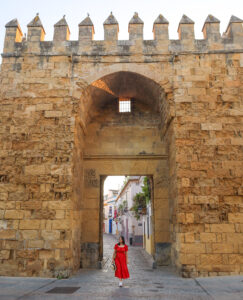
As you enter/leave the Jewish Quarter, walk through the 14th-century gate, Puerta Almodovar. It is one of the three remaining gates of Córdoba’s medieval wall. It is part of the historic center of Córdoba, which was declared a UNESCO World Heritage Site in 1984.
From within the walls, it looks like just another archway, but from outside it looks quite beautiful. As you step outside, you can actually see the city walls.
And right next to this gate is Calle Cairuan , a picturesque street that runs right next to the historic city walls.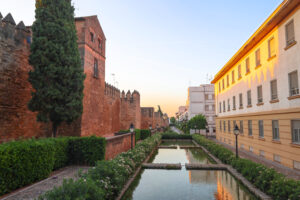
As soon as you step into the Judeira, you will notice that the streets here feel more authentic. Just simply wander around on foot and discover the beautiful streets and hidden corners here. You can even go on a little shopping spree 😉
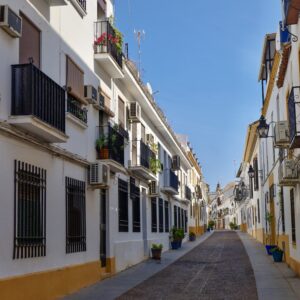
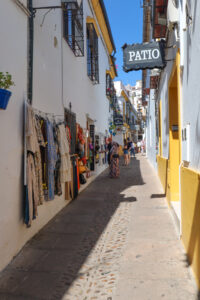
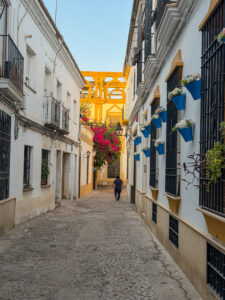
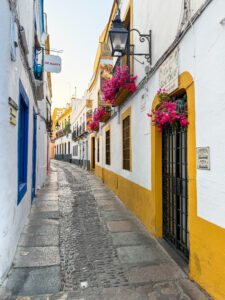
One of the most famous and most photographed streets in Córdoba is the Calleja de las Flores, the flower alley. It is only a stone’s throw away from the Mezquita. What makes this street worth stopping by? It is beautifully decorated with flowerpots and plants on both sides and you get a lovely view of the Tower. It is a narrow alley and gets crowded but have a little patience, and it will clear up. I even picked up a magnet resembling this street 😊
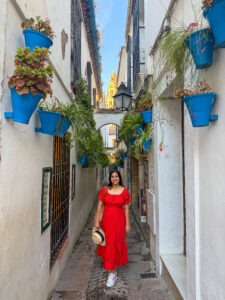
But as you can see, since we visited in mid-September, there were barely any flowers 😞
Calleja de la Hoguera is another beautiful street framed by bougainvillea flowers.
Check out the Patios
Apart from the Mezquita, Córdoba is famous for its beautiful patios. Picture whitewashed walls, colorful flower pots, lots of plants and beautiful fountains in the center. Just look at this – isn’t it just so pretty 😍
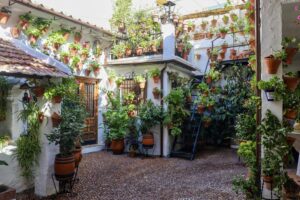
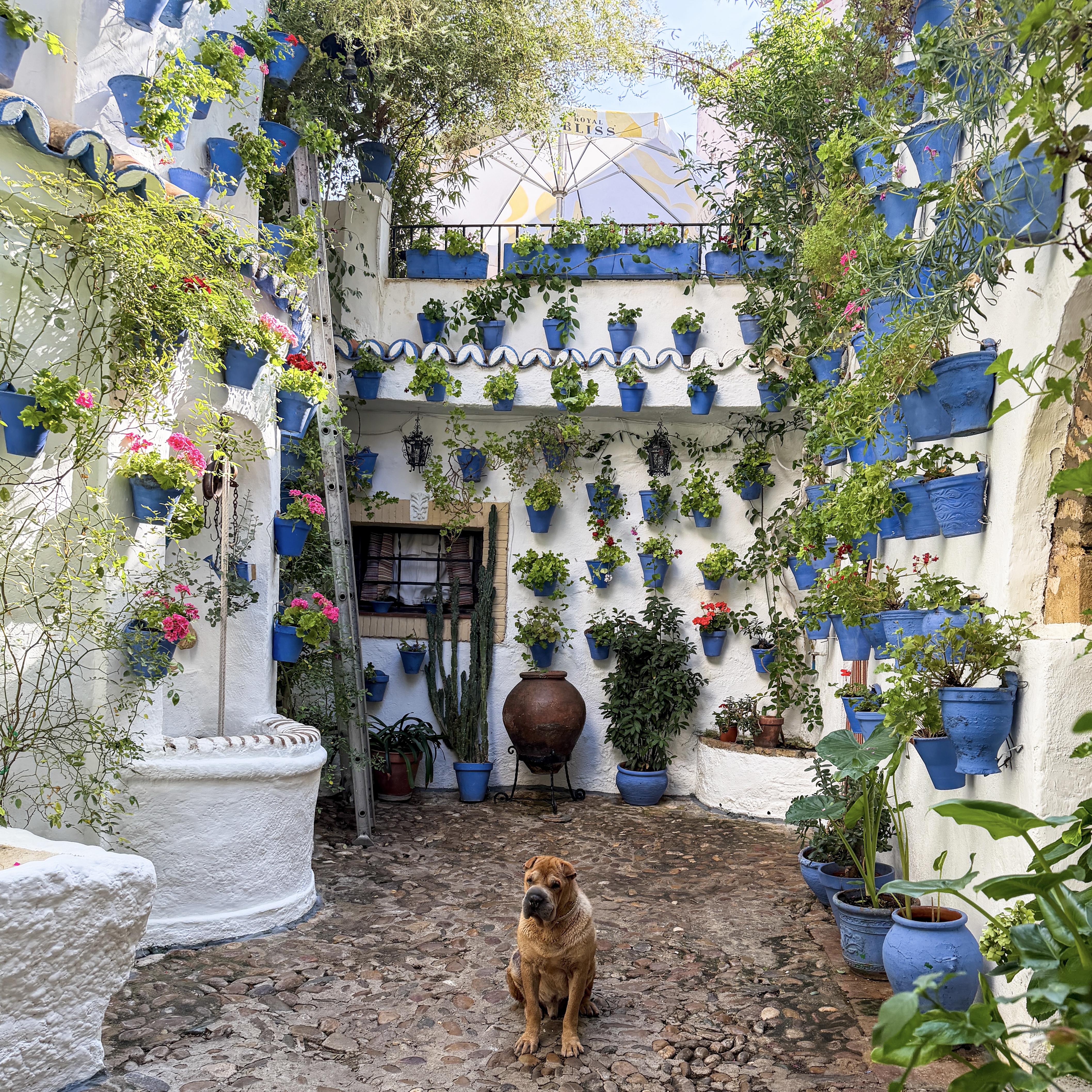
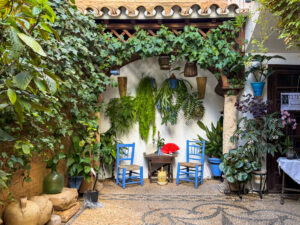
The story of these patios dates to Moorish times. It can get very hot in Córdoba in the summer. When we visited, it was almost 35 degrees C in mid-September so you can imagine how hot it must be in peak summer!
Due to the hot dry climate, the Roman style was imitated in Córdoba. Houses were built around a central courtyard with a well or fountain in the middle to collect rainwater. When the Muslims captured Córdoba, they continued the tradition of the patio, adding an entrance from the street and filling the patios with plants and flowers. Over time, the patios have been transformed into an oasis, with hundreds of flowers plants decorating the walls, staircases and balconies.
Every patio has its own charm – hand painted pots overflowing with geraniums, tiled walls, fountains, cozy nooks with rocking chairs, or trees laden with bougainvillea and fruits.
Every May, a big festival, Festival de los Patios, is held in this city. During this festival, homeowners actually open their private courtyards to visitors and compete for the title of the most beautiful patio in the city! Each owner is vying for that #1 position and goes all out to win the prize! While the patios look the prettiest during this festival, because these are private residences with limited space, expect queues during peak times, especially on weekends.
The good thing is that these patios are maintained throughout the year. So even if you are visiting outside of the festival dates, you can still see them. One way to see them is by buying a ticket from Ruta de Patios Córdoba ticket office for €6.5, which provides access to five patios in the San Basilio neighborhood. This ticket office is located at Calle San Basilio, 14, Córdoba.
Here are some beautiful patios we visited on this ticket.
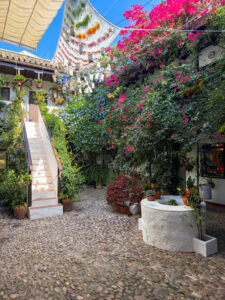
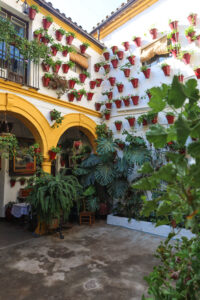
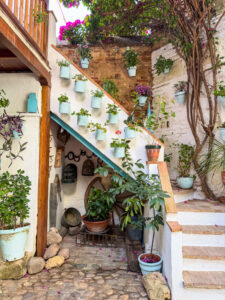
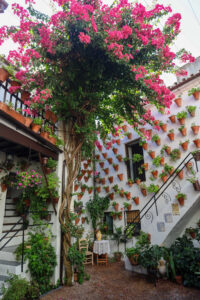
Apart from these five, you can walk into others as well. You will usually notice a sign outside their house advertising that they have a patio open. Like the one pictured below, they are free to enter but may seek a small donation.
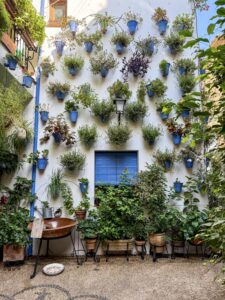
The locals are very proud of their patios and dedicate their time and work year-round to keep them in pristine condition. So please be respectful of this rule, as these are people’s homes and not just tourist attractions. Also, check the operational hours since most of them close in the afternoons.
If you don’t want the hassle of figuring out which ones to see and how to get there you could book a private tour of these patios. You can find plenty on Get Your Guide.
Roman Bridge
This iconic Roman bridge crosses the Guadalquivir River and connects both sides of the city. It dates back to the 1st century BC and has been rebuilt or renovated countless times since then.
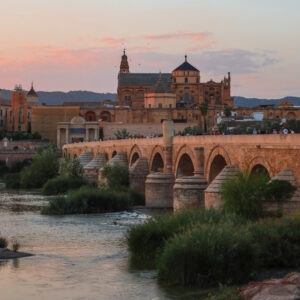
The best view of the bridge is on the opposite side of the river. The Puente Romano is pedestrian-only. You can walk at a leisurely pace, listen to local musicians performing here or grab a seat on one of the benches if you want to simply rest and relax. On the other side of the bridge, you see the Torre de la Calahorra, which is home to a museum. You can also climb up this tower for a lovely view of the city of Córdoba (entry costs €4.5).
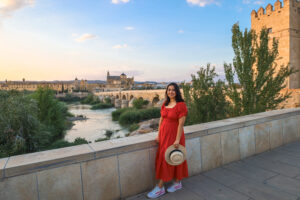
I would recommend visiting this bridge during sunset – The sun casts an amber and orange glow over the Guadalquivir River and the walls of the Mezquita-Cathedral, and it truly looks like a painting! Also, as you cross the bridge, walk down to the left as well as the right side for different perspectives.
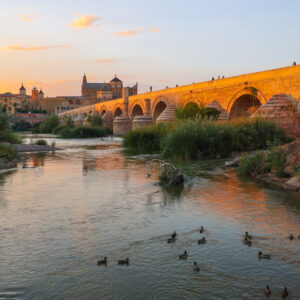
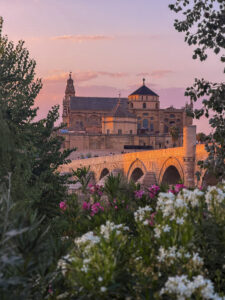
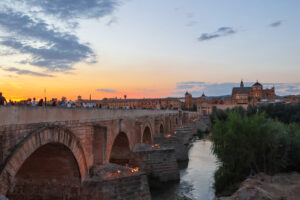
Game of Thrones fans may also recognize the Roman Bridge as the Bridge of Volantis. It was of course, edited with a lot of CGI.
Alcázar de Los Reyes Cristianos
Alcázar de Los Reyes Cristianos (Palace of the Christian Monarchs), is a 14th-century fort with terraced gardens. Acting as both a fortress and palace, it was the favoured home of many Christian Kings. The palace itself is less impressive since there isn’t much to see, except for a few mosaics and a small chapel. However, it is worth visiting specially for the stunning gardens.
Tickets for the Alcázar cost €5. However, note that the Alcázar closed for restoration in 2025 and partially opened in 2026. As of now, you can visit the gardens, towers, courtyard and walls; interior rooms open as works finish. Please check here to know the exact status of the place before planning your visit.
Palacio de Viana
Although it may appear austere from the outside, with its simple white walls, Palacio de Viana houses the best preserved stately home in Córdoba. This palace consists a total of twelve patios and a garden. The palace building and the courtyards have been built over the course of five centuries, therefore, the patios display a unique diversity in their architecture.
Palacio de Viana brings together in one place the largest concentration of courtyards in the city and a palace-house full of furniture, works of art, heritage and history, gathered over five centuries. It reflects the personalities and tastes of the families who lived there between 1425 and 1980.
Ticket prices vary depending on if you only want to visit the gardens or both indoor and outdoor sections. Click here for ticket price information. I was initially keen on stopping by for the gardens, but I was slightly underwhelmed by the lack of greenery and flowers in the city as well as the patios. May be because this region had a very dry summer, there were barely any flowers in any of the pots. So, I decided to skip this one.
Plaza de la Corredera
Plaza de la Corredera is Cordoba’s main public square and the social heart of the city. The main square dates to the 17th century and is characterized by a terracotta-coloured facade, resembling the Plaza Mayor of Madrid. It was originally built and used as a bullring and marketplace in the olden days.
Today, it is lined with bars and restaurants filled with outdoor tables which remain busy from morning until late at night. There is also Mercado La Corredera, an indoor market on the ground floor, open Monday through Saturday. Every Sunday morning from 9am to 2pm, a flea market takes place here featuring books, antiques, and collectibles.
And just steps away from this Plaza, you will find another plaza, Plaza de las Tendillas. It is now the commercial heart of Córdoba , located between the historic old quarter and the modern business district.


Roman Temple Ruins
Near Palacio de Corredera, you will find Córdoba’s small Roman Temple ruins. I will be honest; there is not much to see here. If you are in the area then yes, you can stop by but wouldn’t recommend going out of your way for this one.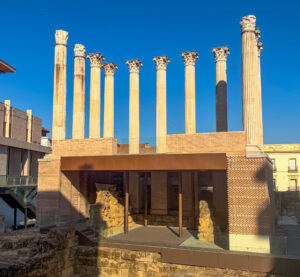
Find some interesting statues / sculptures
Some of the most famous sculptures in this city are the ones dedicated to the patios of Córdoba. The sculpture ‘El abuelo con el niño’ is a cute sculpture located near the famous flower patios of Córdoba. This sculpture can be found in Plaza de Manuel Garrido Moreno.
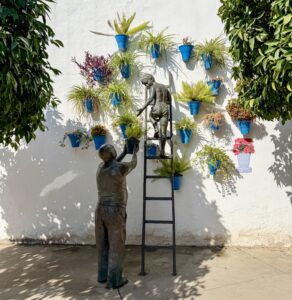
Another famous one is La Regadora, which depicts a woman watering potted plants with a traditional tin can and cane. It honors the caretakers of Córdoba’s famous courtyard festival.
You will also find a statue of Ben Maimónides, a local Jewish scholar in this city.
Mercado Victoria
Many European cities have a food hall/ market and Córdoba’s is called Mercado Victoria. Mercado Victoria is a modern food market featuring food stands serving traditional Andalusian dishes and food from around the world.
Even though it is small, there is a lot of variety here in terms of food – from sushi to pasta to pizza to tacos to even a jacket potato stall! The hall has a fun vibe on weekends when locals as well as tourists visit. We had a couple pizzas as well as nachos from one of the food stalls here on our first night.
The market is located inside one of Córdoba’s most beautiful parks – Jardines de la Victoria. It is a beautiful public park worth a visit if you have more than a day in Córdoba. Since our hotel was on the other end of the town, we passed by these gardens every time we walked to the town. It is a beautiful green space in the city.
Where to Eat
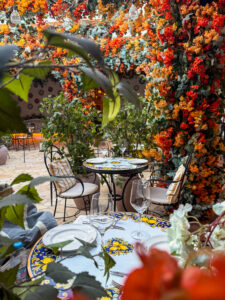
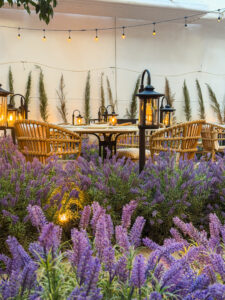
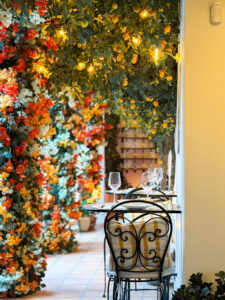
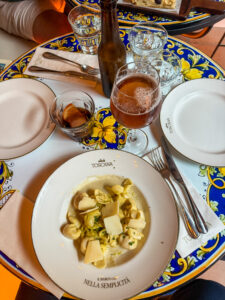
One of the best meals we had in Andalusia was in this lovely restaurant called Voltereta Toscana. It is an Italian restaurant located in the historic Jewish Quarter of Córdoba. There is not just one, but four different seating areas each one inspired by the Italians towns of Capri, Tuscany, Rome and Naples. We ordered a couple drinks and pastas.

Pasillo Oriental is a lovely Mediterranean restaurant in the heart of the Jewish quarter. We ordered lentil soup, koshari, falafels and salad all of which were delicious.
For breakfast, check out Restaurante Patio Romano, which provides Italian and Andalusian cuisine and is located just steps away from the cathedral mosque. The eating area is actually designed like a patio to resemble the famous patios of this town.
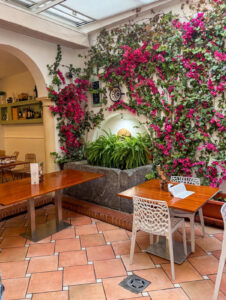
We grabbed egg bagel sandwiches and Pan con tomate which is such a simple dish but tastes so good ! Pan con tomate is a toasted bread rubbed with fresh garlic, ripe tomato pulp, extra virgin olive oil, and sea salt is widely enjoyed across Spain and a must try when you visit !
For coffee, head to Tueste Specialty Cafe. There was a bit of a queue since it is super small but strong coffee! I also grabbed a banana bread.
Golden Stack is a bit far from the Jewish quarter but worth the hike. Head over here for delicious breakfast as well as pancakes.

Arte+Nata for some delicious pasteis de nata and OJ.
If you are looking for a quick bite on the go, then check out Caprichitas, a specialty artisan French fries shop, inspired by traditional Belgian and Dutch double-frying methods. You can add sauces and toppings of your choice and make it a proper meal by itself.
Try some Local Food
Here are a few vegetarian items to try in Córdoba:
- Salmorejo – a traditional Córdoba tomato soup which is thick, creamy and served cold. For the vegetarian version, make sure you ask for it without chopped-up bits of ham and egg on top.
- Ajoblanco – another cold soup made with garlic, almonds and bread. This is normally served only in summer months.
- Berenjenas con miel – deep-fried aubergine drizzled with molasses or honey.
- Alcachofas a la Montillana – artichokes cooked in local Montillana wine.
- Pastel cordobés – A puff pastry tart filled with pumpkin/squash jam.
Other Places of Interest
Medina Azahara – The ruins of a 10th-century palace city, about 8 km outside Córdoba. It is a UNESCO World Heritage Site. You will need a car, a taxi or the tourist bus to get there, so visit only if you are staying overnight in Córdoba.
Castle of Almodóvar del Rio – Lying just 24 km outside of Córdoba, the Castle of Almodóvar del Rio is a castle of Arab Muslim origin and a must visit if you have additional time on hand. This medieval fortress represented Highgarden (the seat of House Tyrell) and the underground dungeons of Casterly Rock in Season 7 of Game of Thrones.
*Prices as of September 2026